
Enclosed Busbar vs Festoon System: Which Is Better for Crane Electrification?
April 18, 2026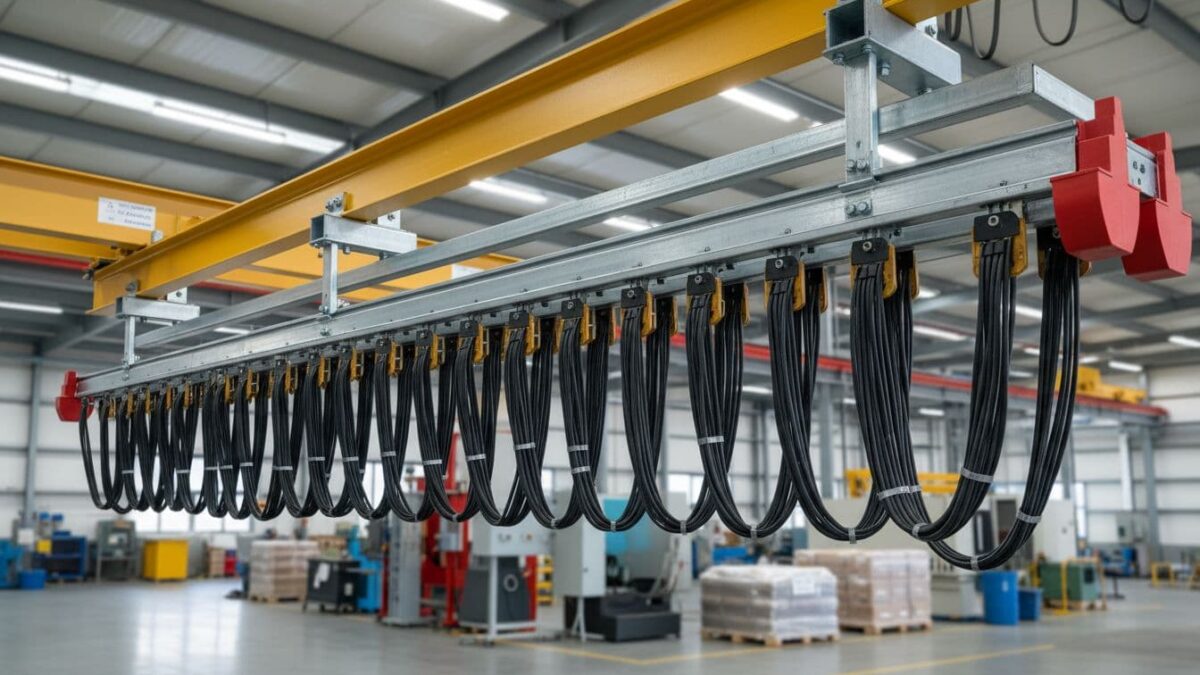
A festoon system is a festoon cable system used in material handling on overhead cranes, hoists, port equipment, and warehouse machines. Its job is simple but critical; it lets power and control cables travel with the equipment without tangling, dragging, or wearing out too soon.
When the system is sized and installed well, movement stays smooth and cable routing stays controlled. That means fewer cable failures, safer work areas, and less downtime for the operation.
This guide explains the main festoon system components, how they work together, and what to check before choosing a setup.
Key Takeaways
- Festoon systems guide power and control cables along fixed tracks for overhead cranes and material handling equipment, preventing tangling, dragging, and premature wear while ensuring smooth movement and safer work areas.
- Core components like galvanized C-track or I-beam, tow and follower trolleys, constant-flex cables, hangers, and end hardware work together to support cable loops through the full travel path.
- Proper sizing matches travel length, cable weight, speed, duty cycle, and environmental factors like dust, moisture, or corrosion to avoid failures and extend system life.
- Avoid installation errors such as track misalignment or poor trolley spacing, and perform regular maintenance checks on wheels, cables, and loops to minimize downtime.
- Trends in 2026 include lighter modular designs, enclosed tracks, and hybrid power-data setups with monitoring for better uptime in automated facilities.
What a festoon system does and why many facilities rely on it
A festoon system guides cables along a fixed track while the connected machine moves back and forth. Instead of letting cables hang loose, the system forms them into controlled loops. Those loops move in a predictable way, so the cables stay supported through the full travel length.
That basic idea matters in real industrial work. Overhead cranes, gantry cranes, bridge cranes, jib cranes, monorails, transfer cars, and automated handling lines all move repeatedly. Without proper cable management, cables rub on steel, twist, drag on the floor, or snag on nearby structures. Over time, those problems lead to insulation damage, signal loss, and unplanned stoppages.
Because of that, many facilities rely on festoon systems for both power supply and control signals, especially for crane electrification. They keep cable routing cleaner, reduce manual intervention, and help equipment move safely in dusty, wet, or outdoor areas. While a conductor bar system or cable reel are alternatives, the festoon system remains a reliable choice for specific industrial environments.
How cable loops move with the machine without twisting or snagging
The moving machine connects to the tow trolley, which leads the cable set along the track. As the tow trolley moves, the other trolleys follow behind it. Each trolley supports part of the cable load, so the cable forms even loops between trolley points.
When the machine travels out, the loops open gradually. When it returns, the loops gather back together in a controlled way. Because the trolleys roll on a fixed track, the cable path stays stable instead of twisting freely.
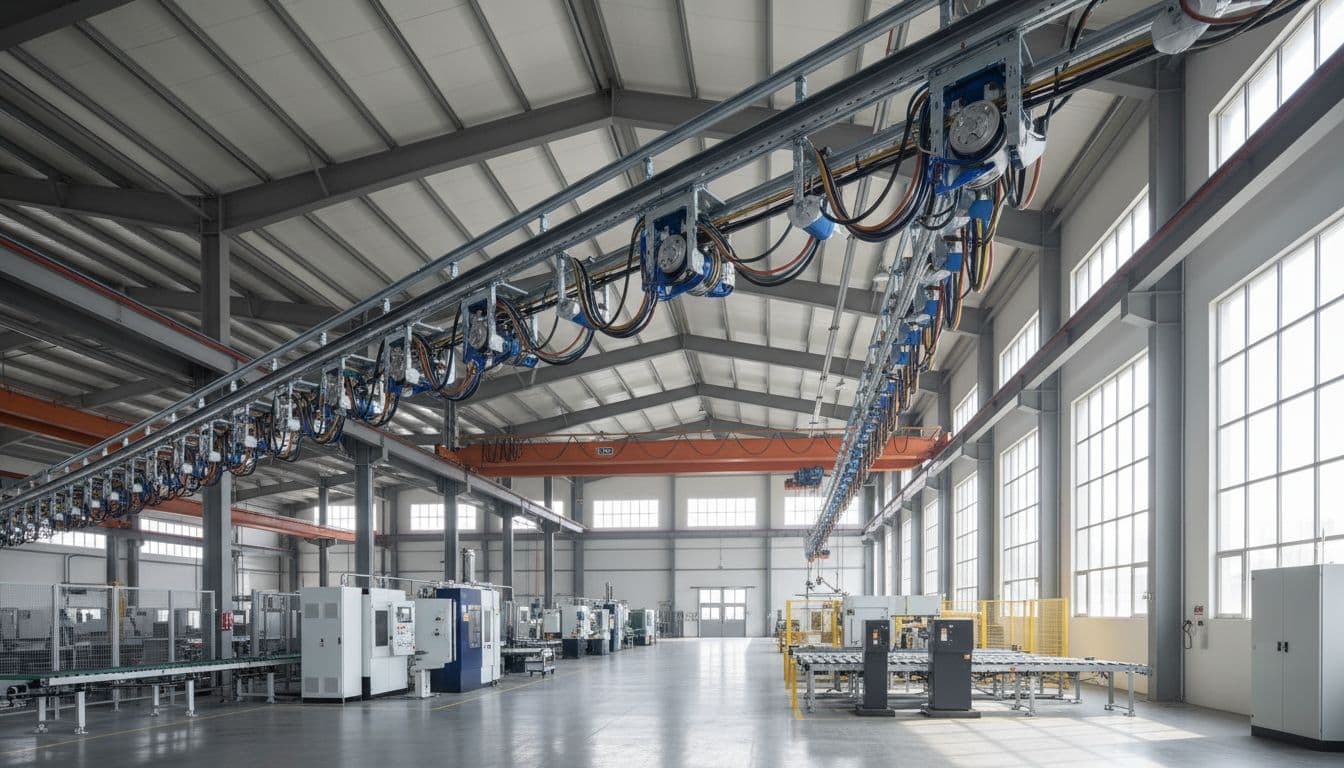 A good festoon setup reduces cable wear because it controls bending and rubbing. It also helps keep power and signal delivery stable, which matters for brakes, sensors, drives, and control panels.
There is also a clear safety benefit. Loose cables create trip risks, snag points, and maintenance headaches. In contrast, a well-designed festoon system keeps cables off the ground and within a defined travel zone.
The strongest festoon systems don’t depend on one strong part. They depend on the whole assembly working as one.
The core festoon system components and what each one does
Every festoon system has a few key parts, and each one affects system life. If one part is poorly selected, the whole cable package can suffer.
Track and support hardware, the backbone that carries the whole system
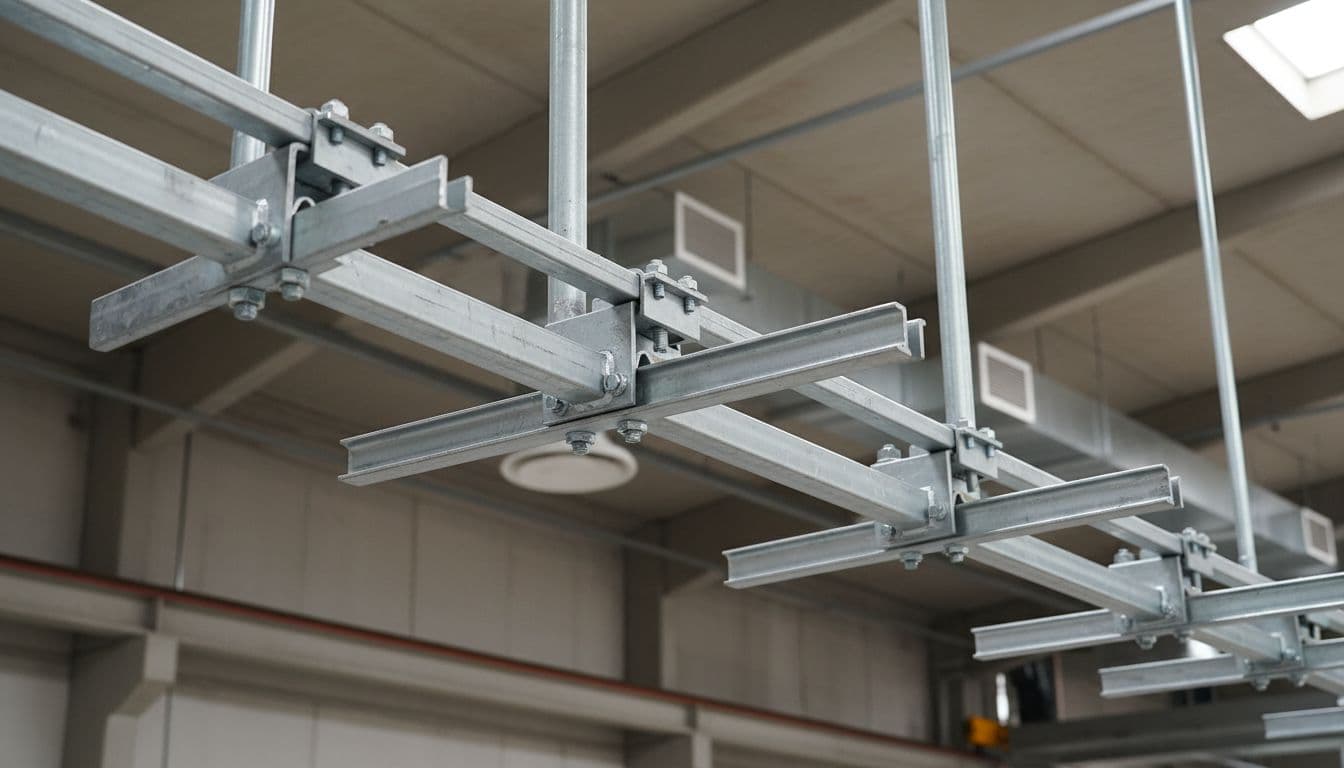
The track is the rail that guides trolley movement. In many industrial installations, this is a C Track Festoon System or similar formed galvanized steel section. Alternatives include an I Beam Festoon System or Wire Rope Festoon. It has to stay straight and level, because even small misalignment can cause rolling resistance, wheel wear, or bunching.
Support hardware includes brackets, cross arms, angle iron, clamps, and mounting fasteners. These parts hold the track securely at the correct spacing and elevation. On longer runs, support layout becomes a structural issue, not only a mounting detail.
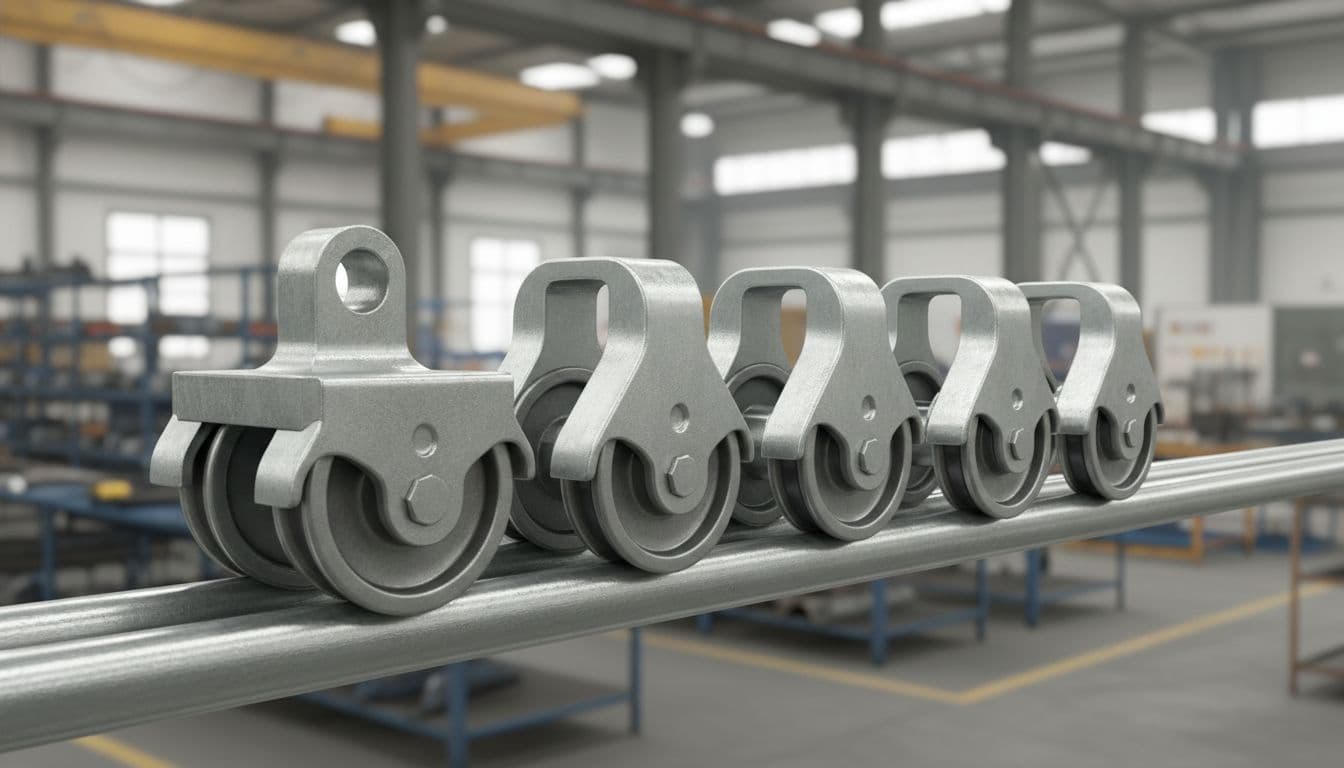
 Festoon Trolleys and the tow trolley, the moving parts that guide cable travel
Standard festoon trolleys carry the cable loops. The tow trolley is different because it connects to the moving machine and pulls the cable package through the travel path. If the tow trolley is undersized, the whole festoon system feels the strain.
Wheel design matters more than many buyers expect. Good wheels roll smoothly, resist wear, and suit the track profile. Festoon trolleys choice also affects travel speed, load handling, and how well the system performs over time.
 Cables, cable carriers, and hangers, the parts that protect power and control lines
Festoon cables may be flat cable or round cable, depending on the application. For repeated movement, constant-flex cable construction is often the right choice. The cable jacket must also suit the environment, especially where oil, moisture, UV, or abrasion is present.
Cable hangers or saddles support the cable on each trolley. Their job is to hold the loop shape, limit sagging, and reduce rubbing. In some applications, cable carriers or extra protection may help separate power and signal lines.
End clamps, end stops, junction boxes, and connectors that keep the system controlled
End clamps anchor the fixed cable end. End stops define trolley travel limits and help prevent overrun. Junction boxes and connectors create safe, organized termination points for incoming and outgoing circuits.
These parts may look small, but they control the system’s edges. Without them, cables can bunch up, pull against terminations, or lose proper loop spacing.
How to choose the right festoon components for your application
Component choice should start with the machine, not the catalog. Travel distance, cable weight, speed, and operating duty all shape the design of your festoon cable system.
Match the system to travel length, cable weight, speed, and duty cycle
Long travel needs more careful trolley spacing and loop planning. Heavier cable loads may require stronger trolleys, higher track capacity such as Square Rail Festoon, and better support hardware. Faster travel can also increase shock load at starts and stops.
This quick reference helps connect job conditions to component choice:
| Application factor | Why it matters | Common impact on design |
|---|---|---|
| Travel length | Sets loop count and track run | More trolleys, longer track |
| Cable weight | Adds rolling and hanging load | Higher trolley load rating |
| Travel speed | Increases dynamic stress | Better wheels, stronger tow trolley |
| Duty cycle | Raises wear over time in Heavy Duty Applications | Constant-flex cable, tougher hardware |
The main takeaway is simple: never guess sizing. Many standard systems have clear per-trolley load limits, and exceeding them shortens service life.
Plan for heat, dust, moisture, corrosion, and outdoor exposure
The environment changes material choice quickly, especially in Industrial Environments. For example, galvanized steel helps in humid areas, while enclosed tracks can protect movement in dusty plants. Outdoor Applications such as port cranes, yards, and mills often need stronger corrosion resistance and cable jackets built for sunlight and weather.
Low-cost parts may look similar at first glance. However, weak plating, poor wheel material, or unsuitable cable compounds often show their limits early.
Installation mistakes to avoid and maintenance checks that prevent downtime
A good festoon system design can still fail if the installation is careless. Small errors at the start often become repeated problems later. Proper installation is also critical for safety, particularly in specialized applications like explosion-proof cranes.
Common installation errors, from uneven tracks to poor trolley spacing
The most common issue is poor alignment. If the track is not level, trolleys may drift, jam, or wear unevenly. Wrong trolley spacing can also cause loops to sag too much or bunch too tightly.
Teams should also confirm travel length, secure end hardware correctly, and test rolling movement before putting the machine into full service. A short test run often reveals drag, impact, or loop problems early.
Simple maintenance checks that help festoon systems last longer
Regular visual checks go a long way. Look for worn wheels, loose hangers, cracked cable jackets, rust, rubbing marks, and connector damage. If loops no longer open and close evenly, the festoon cable system needs attention.
Early replacement is usually cheaper than a shutdown, helping to control maintenance costs. That is especially true on crane lines and heavy-use warehouse systems where lost operating time costs more than spare parts.
Frequently Asked Questions
What is a festoon system and why use it?
A festoon system is a cable management solution for material handling equipment like overhead cranes, where trolleys on a fixed track guide power and control cables in controlled loops as the machine moves. Facilities rely on it to prevent cable damage from rubbing, twisting, or dragging, which leads to fewer failures, safer operations, and reduced downtime compared to loose cables or alternatives like reels.
What are the main components of a festoon system?
Key parts include the track (e.g., C-track or I-beam) and support hardware as the backbone, tow trolleys that connect to the machine and follower trolleys that support cable loops, constant-flex cables with hangers for protection, and end clamps/stops/junction boxes to control limits and terminations. Each component must be matched to the load and environment for reliable performance.
How do you choose the right festoon system for an application?
Start with travel distance, cable weight, speed, duty cycle, and site conditions like heat, dust, or outdoor exposure to select track type, trolley ratings, cable construction, and materials. Use references for per-trolley load limits and opt for galvanized or enclosed options in harsh environments to ensure long-term reliability over lowest upfront cost.
What are common installation mistakes to avoid?
Poor track alignment causing trolley drift or jamming, incorrect trolley spacing leading to sagging or bunching loops, and unsecured end hardware are frequent issues. Always level the track, test rolling movement, and confirm travel length before full service to catch problems early and maintain safety.
How can you maintain a festoon system to prevent downtime?
Conduct regular visual inspections for worn wheels, cracked cable jackets, loose hangers, rust, or uneven loops, and replace parts early. These simple checks on high-use systems like crane lines help control costs, as spare parts are cheaper than shutdowns from failures.
New festoon system trends shaping industrial cable management in 2026
Current market estimates place the global cable festoon sector at about $1.2 billion in 2026, with growth tied to automation and material handling demand in automated warehousing. The design trend is practical, not flashy. Buyers want lighter parts, faster installation, and better uptime.
Lighter materials, modular kits, and enclosed tracks for faster, cleaner installs
More systems now use lighter trolley materials and modular hardware to reduce install time and simplify future changes. Enclosed C-track designs are also gaining ground where dust and dirt affect open-running systems.
Hybrid power and data setups with smarter monitoring for wear and failure alerts
Mixed power-and-data festoon packages are becoming more common on automated equipment, supporting power transmission along with power supply and control signals. At the same time, some higher-spec systems now add wear monitoring or condition checks, so maintenance teams can spot trouble before a failure stops production.
A festoon system works best when every part fits the duty, the cable load, and the site conditions. Track, trolleys, cables, hangers, and end hardware all have to work together in a festoon cable system.
The lowest upfront cost rarely delivers the lowest long-term cost. For industrial cable management, system fit is what protects uptime, safety, and cable life in a festoon system.