
How Material Choice Shapes I-Beam Trolley Performance
April 10, 2026
Enclosed Busbar vs Festoon System: Which Is Better for Crane Electrification?
April 18, 2026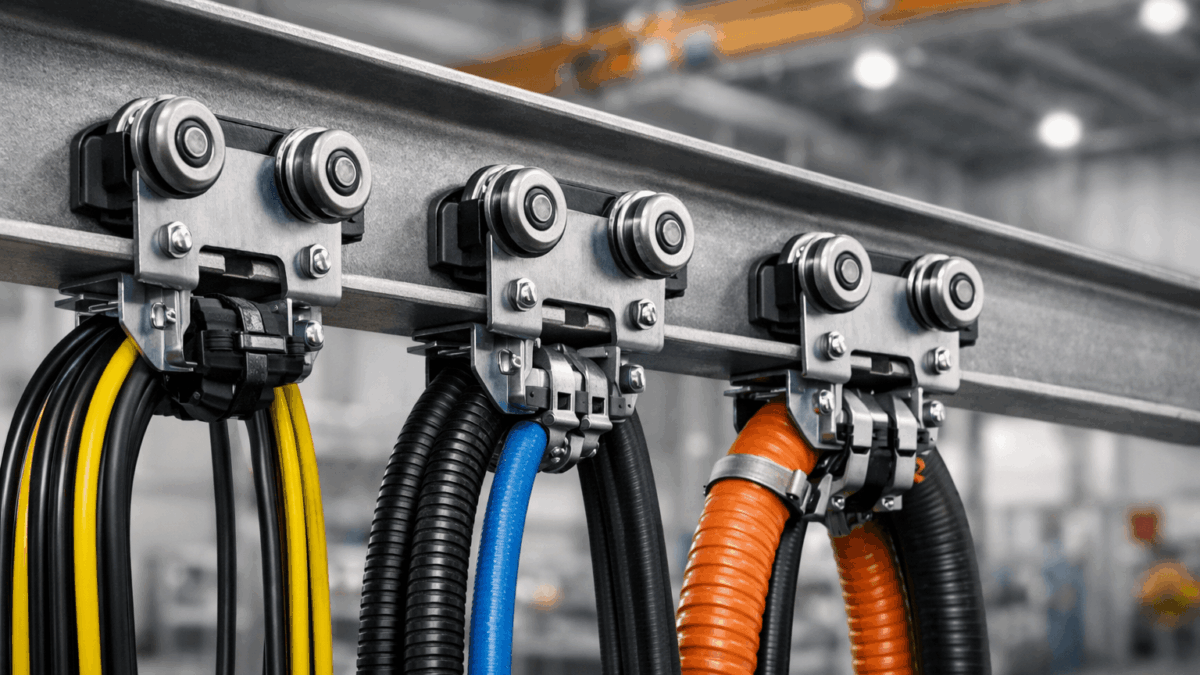
In industrial movement systems, selecting the right I-beam trolley is important for supporting reliable cable and hose travel. While the trolley itself may appear to be a simple mechanical component, its design, material, compatibility, and load suitability all affect how well the overall system performs over time.
For engineers, buyers, and project teams, choosing the correct trolley is not only about fitting it onto a beam. It also involves understanding movement conditions, supported load, environmental exposure, and how the trolley will work within the wider cable or hose support arrangement.
What Is an I-Beam Trolley in Cable and Hose Support Systems?
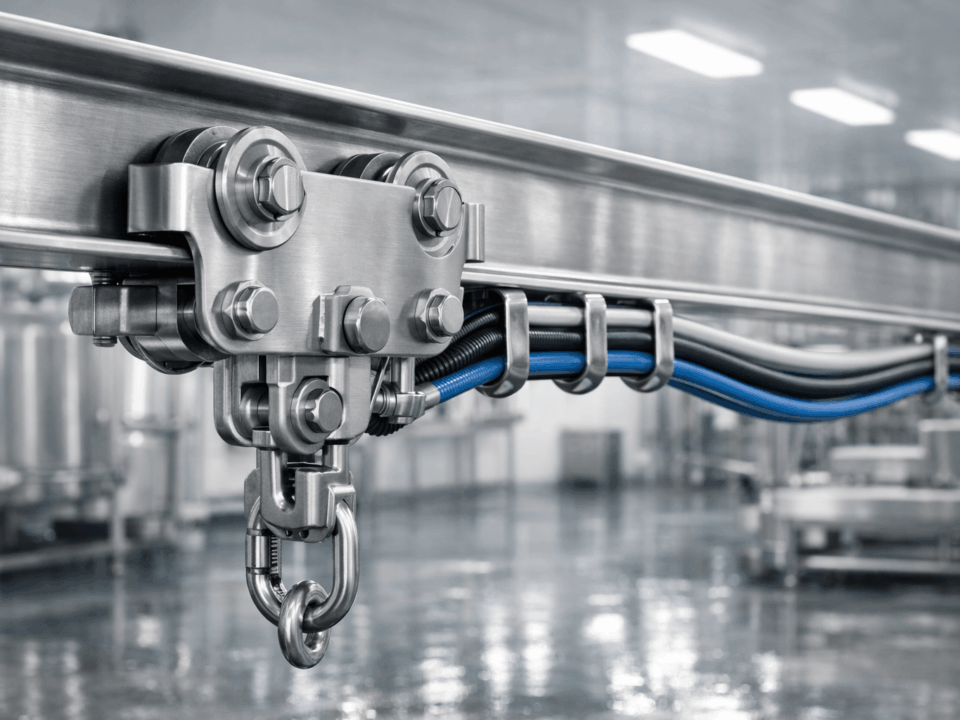
An I-beam trolley system is used to carry and guide moving cables, hoses, or related components along an I-beam track. As machinery or supported equipment travels, the trolley moves along the beam while helping keep the suspended line organised and controlled.
This type of arrangement is commonly used in industrial applications where repeated travel movement requires dependable support for electrical cables, control lines, air hoses, or fluid hoses. Proper trolley selection helps reduce movement resistance, support smoother operation, and minimise unnecessary wear on the supported line.
Why Correct Trolley Selection Matters
If the trolley is poorly matched to the application, the system may face higher wear, reduced movement quality, and more maintenance over time. A trolley that is too light, incorrectly fitted, or unsuitable for the operating environment can create avoidable issues across the broader support system.
Choosing the right beam trolley system helps support:
- smooth cable or hose movement
- better load handling
- reduced wear on supported lines
- improved reliability during repeated travel cycles
- more practical long-term maintenance planning
Main Factors to Review Before Choosing an I-Beam Trolley
1. Type of Supported Load
The first step is to understand what the trolley will support. Some systems carry electrical power cables, while others support control cables, air hoses, water hoses, or mixed service lines. The weight, flexibility, and movement characteristics of the supported line directly affect trolley selection.
A trolley selected for a light cable arrangement may not be suitable for heavier hose movement or harsher duty conditions. This is why load assessment should always be reviewed early.
2. Load Weight and Distribution
Total supported weight is one of the most important factors. The trolley must be able to carry the working load safely while allowing stable travel along the beam. In many applications, it is not only the individual cable or hose weight that matters, but also the cumulative load across the movement arrangement.
Where load is underestimated, the result may be premature wear, uneven movement, or unnecessary stress on both the trolley and supported lines.
3. Beam Size and Compatibility
Not every trolley fits every beam. The flange width, beam profile, and running surface must match the trolley design. Incorrect beam fit can cause poor rolling performance, instability, or excessive wheel wear.
Before final selection, the actual beam dimensions and operating setup should be checked carefully to ensure the chosen I-beam trolley system is mechanically compatible with the installation.
4. Travel Distance and Movement Frequency
A short, occasional movement path is different from a long-travel application running frequently throughout the day. Trolleys used in continuous or high-cycle industrial environments may require more robust construction, smoother movement performance, and higher-quality components.
Duty cycle should always be considered together with load and environment, rather than as a separate issue.
5. Operating Environment
Environmental conditions strongly affect material choice and long-term durability. Indoor dry conditions may allow standard material options, while humid, corrosive, outdoor, or washdown environments may require more suitable components.
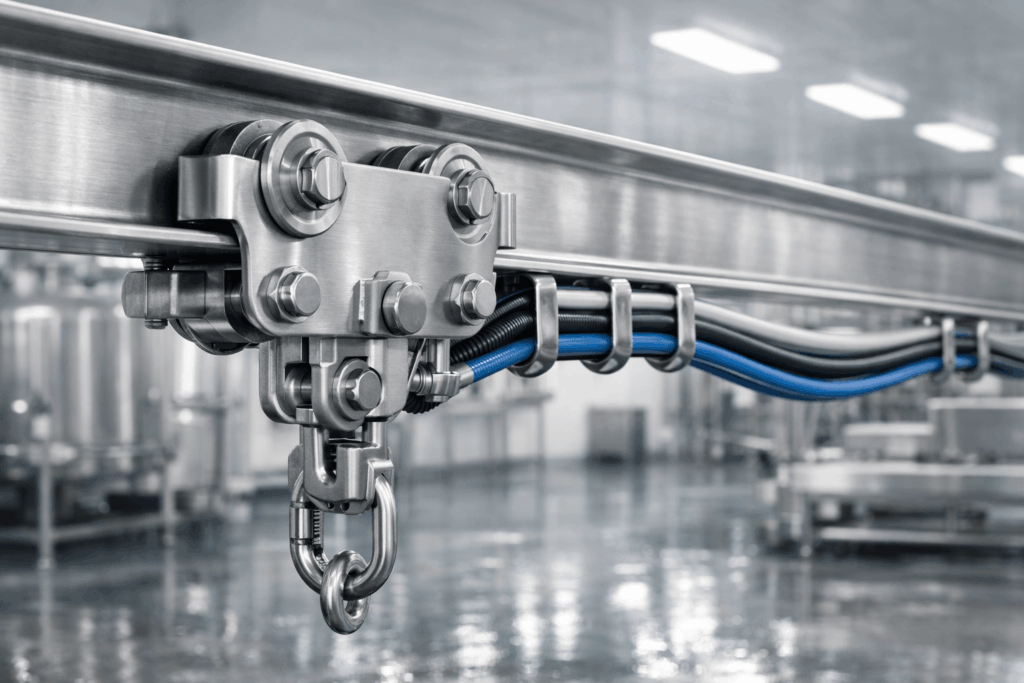
In applications where corrosion resistance is especially important, a stainless steel I-beam trolley may be more appropriate than a standard steel version.
6. Cable or Hose Movement Characteristics
Some supported lines are flexible and light, while others are heavier, stiffer, or more sensitive to bending radius. The trolley arrangement should allow the line to travel naturally without causing unnecessary twisting, dragging, or stress concentration.
This is especially important where hose movement is involved, as hose weight and stiffness may behave differently from standard electrical cables.
7. Maintenance Access and Service Expectations
When selecting a trolley, it is important to think beyond initial installation. In some facilities, maintenance access is simple. In others, downtime may be costly and inspection access may be limited. In those cases, choosing a durable and suitable trolley configuration may support better lifecycle value even if the initial component cost is higher.
How I-Beam Trolleys Support Cable and Hose Systems
An I-beam trolley is often one part of a broader cable or hose support arrangement. Its role is to allow the supported line to move along a beam path in a controlled way while carrying the associated load.
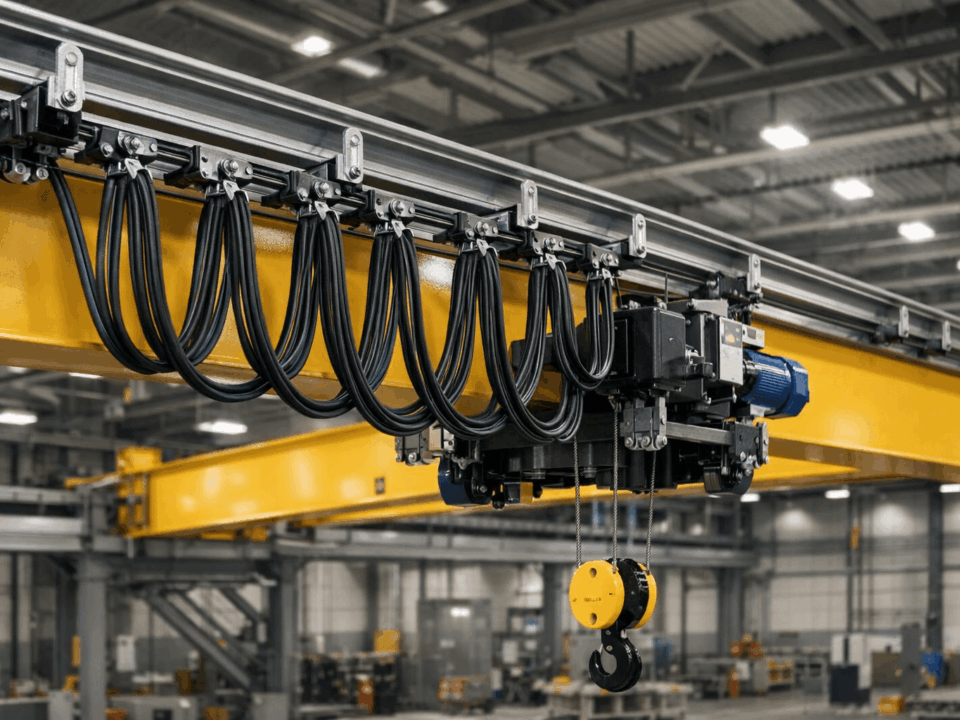
In many industrial setups, trolley-supported systems are used where movement follows a clear beam route and where robust mechanical support is required. Depending on the travel arrangement, this may be part of a cable management system, hose support line, or material handling movement structure.
When an I-Beam Trolley Is a Suitable Choice
I-beam trolley arrangements are often suitable when:
- a beam-based track path already exists
- the system requires guided travel for cables or hoses
- the movement path is linear and repetitive
- mechanical support strength is important
- the installation requires durable movement components
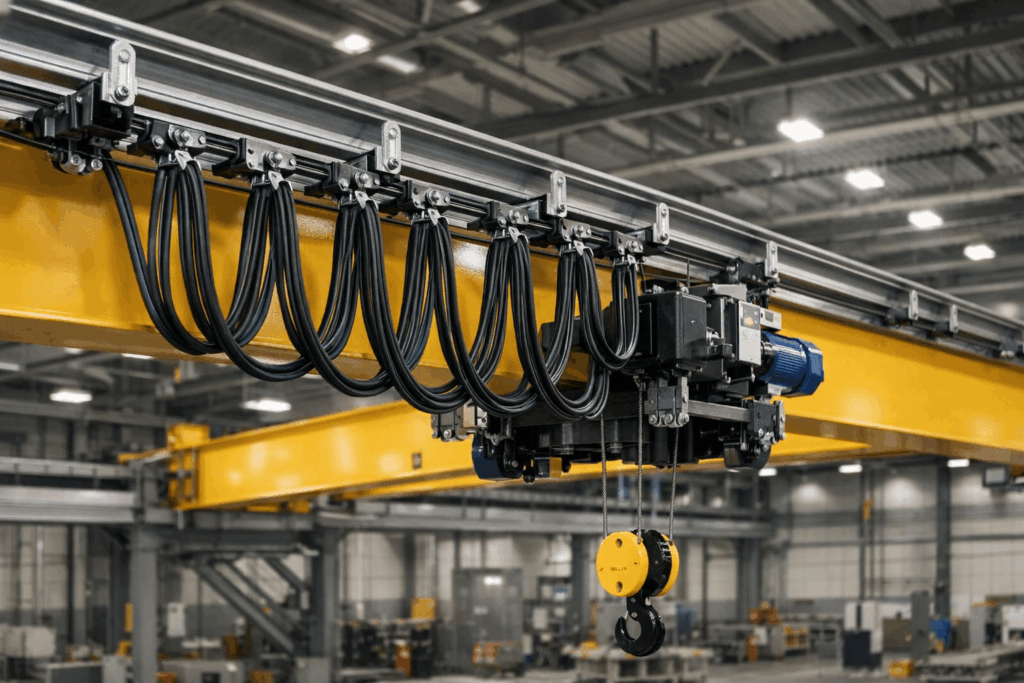
They are commonly used in industrial facilities, crane-related systems, transfer movement arrangements, and other environments where travelling support lines must remain organised during operation.
When Other System Types May Also Need to Be Considered
Although trolley-based support is suitable in many industrial applications, it is not the only approach. Depending on the equipment and travel requirement, some projects may also evaluate a festoon system for moving cable support, or an enclosed busbar system or unipole system for power supply applications.
The correct solution depends on movement type, power requirement, environmental exposure, and overall system design. This is why application review is always more important than selecting based on name alone.
Common Mistakes When Choosing an I-Beam Trolley
Choosing Based Only on Initial Cost
A lower-cost trolley may appear suitable at the beginning, but if it is not matched to the load or environment, replacement and maintenance cost can increase over time.
Ignoring Beam Compatibility
Even a well-built trolley can perform poorly if it is not matched to the actual beam size and profile.
Underestimating Hose Weight
Hoses may be heavier and less flexible than expected, especially when filled or used in demanding industrial conditions. This can affect trolley performance significantly.
Overlooking Environmental Conditions
Humidity, chemical exposure, and outdoor use can shorten service life if material suitability is not reviewed properly.
Not Reviewing Travel Frequency
Repeated daily movement places ongoing demand on trolley wheels, structure, and supported components. Duty cycle must be considered during selection.
Practical Selection Approach for Engineers and Buyers
A practical way to choose the right trolley is to review the application in the following order:
- identify the type of cable or hose being supported
- check total supported load and travel length
- confirm beam size and installation geometry
- review the environment and corrosion risk
- consider movement frequency and expected duty
- assess maintenance expectations and service life goals
This structured approach helps reduce the risk of choosing an underspecified or unsuitable I-beam trolley system for the application.
Conclusion
Choosing an I-beam trolley for cable and hose support systems involves more than selecting a component that fits onto a beam. Proper selection depends on supported load, beam compatibility, travel conditions, environment, and long-term service expectations.
For industrial applications, a well-matched I-beam trolley can support smoother movement, more reliable cable or hose handling, and better long-term maintenance performance. Where environmental exposure is more demanding, it may also be useful to review whether a stainless steel I-beam trolley is more suitable for the operating conditions.
FAQ
1. What is an I-beam trolley used for in cable and hose systems?
An I-beam trolley is used to support and guide moving cables or hoses along a beam path in industrial systems where controlled travel movement is required.
2. What should be checked before choosing an I-beam trolley?
Important factors include supported load, beam size, travel distance, movement frequency, environment, and maintenance expectations.
3. Can the same trolley be used for both cables and hoses?
Not always. The suitability depends on the weight, flexibility, and operating behaviour of the supported line. Hoses may require different selection considerations compared with lighter cables.
4. Why is beam compatibility important?
Beam compatibility affects trolley fit, wheel movement, stability, and long-term wear. A trolley that does not match the beam properly may not perform reliably.
5. When should stainless steel be considered for an I-beam trolley?
Stainless steel should be considered where corrosion resistance is important, such as in humid, outdoor, washdown, or chemically exposed environments.
6. Is an I-beam trolley always the best option for moving support lines?
Not always. In some applications, other systems such as festoon systems, enclosed busbar systems, or unipole systems may be more suitable depending on movement and power supply requirements.
Disclaimer: Every industrial application has different movement conditions, loading requirements, beam configurations, and environmental factors. For accurate system selection and technical advice, the application should be reviewed by a qualified engineering team.