
What Is an I Beam Trolley? How It Works, Where It Is Used, and Which Industries Need It
March 4, 2026
What Is a Festoon System and How Does It Work in Crane Applications?
March 18, 2026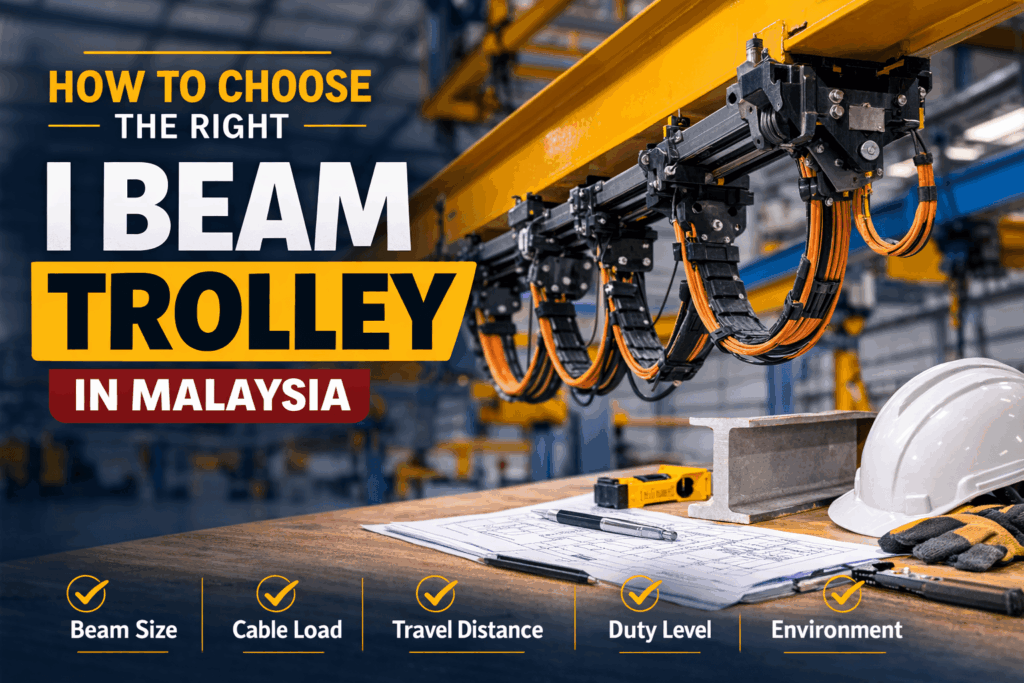
Choosing the right I beam trolley for an overhead crane system is an important step in building a safer and more reliable cable management setup. In industrial environments, the trolley does more than simply move along a beam. It supports travelling cables, helps maintain smoother operation, and reduces the risk of cable wear, poor movement, and unnecessary maintenance issues over time.
For factories, workshops, warehouses, and heavy-duty industrial sites in Malaysia, the correct trolley system should be selected based on actual operating requirements rather than appearance or price alone. Factors such as beam size, cable type, cable load, travel length, operating speed, and environmental condition all affect how well the system performs in daily use.
TL;DR
To choose the right I beam trolley for an overhead crane system in Malaysia, check the beam profile, cable type, cable weight, travel distance, travel speed, duty level, and operating environment. A properly matched system helps support smoother cable movement, reduce wear, and improve long-term reliability. The wrong selection can lead to unstable travel, cable damage, and higher maintenance costs.
Why Correct I Beam Trolley Selection Matters
In an overhead crane system, moving cables need to travel in a controlled and repeatable way. If the trolley system is too light, poorly matched to the beam, or unsuitable for the cable load, the result can be inconsistent movement, cable abrasion, excessive strain, or early component failure.
A correctly selected I beam trolley system helps support:
- Smoother cable travel along the beam
- Better cable protection during repeated movement
- Improved reliability in daily operation
- Lower maintenance risk over the long term
- Safer and more organised cable management
For project teams and buyers, the goal is not only to get a trolley that fits physically. The system must also suit the actual crane application and operating condition.
What Is an I Beam Trolley in an Overhead Crane System?
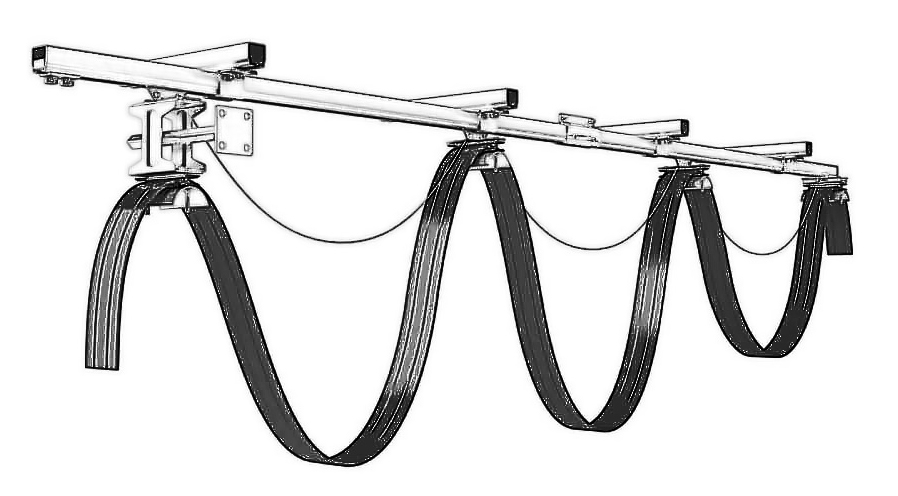
An I beam trolley is a moving cable support component that runs along an I-beam track. In overhead crane applications, it is commonly used as part of a festoon system to carry power or control cables as the crane or related equipment travels. The trolley assembly typically includes towing trolley, middle trolley, and end trolley components arranged to support cable loops in a controlled pattern.
As the crane moves, the trolley system travels with it, allowing the cables to open and close smoothly. This helps reduce loose hanging cables, dragging, and uneven movement that can affect system safety and performance.
1. Check the I-Beam Size and Track Compatibility
The first thing to confirm is whether the trolley is suitable for the beam profile being used. The trolley wheels and body design must match the I-beam dimensions so the unit can travel smoothly without excessive play or poor alignment.
Important checks include:
- Beam width
- Beam flange profile
- Track straightness
- Installation quality of the beam
- Expected trolley running stability
If the trolley does not match the beam properly, it may run unevenly, create vibration, or cause premature wear. In overhead crane systems, this can affect cable movement across the full travel path.
2. Review the Cable Type
Not all cable trolley systems carry the same kind of cable. Some applications use flat cable, while others use round cable or a different cable package depending on the equipment design. The cable type affects how the trolley supports the load, how the cable loops form, and how much bending movement the system must handle.
Before selecting a trolley, review:
- Whether the system uses flat cable or round cable
- Cable dimensions and weight
- Minimum bending requirements
- Number of cables carried in the system
- How the cables will be clamped or supported
A trolley system that is suitable for the cable type will usually give more controlled travel and better protection over time.
3. Calculate the Total Cable Load
Cable load is one of the most important technical factors in trolley selection. The system must support the weight of the moving cables throughout the full travel cycle. If the load is underestimated, the trolley may not perform consistently under actual working conditions.
When reviewing cable load, consider:
- Total cable weight
- Number of cable loops
- Spacing between trolley units
- Additional load caused by movement and repeated travel
- Whether the application is light-duty or heavy-duty
For crane systems with more demanding use, it is important to choose a trolley arrangement that can support the load without creating unstable movement or excessive strain on the cable package.
4. Consider Travel Length and Travel Speed
The movement range of the crane also affects trolley selection. A longer travel path means the cable system will open and close over a greater distance. The trolley design and spacing should allow the cable loops to move in a controlled way throughout the full length of travel.
Travel speed also matters. A system operating at higher speed may require more stable movement and stronger support compared to a low-speed application. Over time, repeated travel cycles can place stress on both the trolley components and the cable itself.
Before selection, check:
- Total travel distance
- Frequency of movement per day
- Operating speed of the crane
- Required smoothness of cable travel
- Expected maintenance interval
5. Match the System to the Operating Environment in Malaysia
Industrial operating conditions in Malaysia can vary widely depending on the sector and project location. Some installations are inside factories or warehouses, while others may be exposed to heat, dust, humidity, or more demanding site conditions. These factors influence how the trolley system performs over time.
Environmental points to review include:
- Indoor or outdoor installation
- Ambient temperature
- Humidity and moisture exposure
- Dust or dirty operating conditions
- Frequency of use and workload intensity
A trolley system selected for the real environment is more likely to maintain stable travel and durability. For Malaysian industrial applications, this step is especially important where climate and site conditions can affect long-term performance.
6. Check Whether the Application Is Light-Duty or Heavy-Duty
Not every overhead crane system operates under the same duty level. Some systems only move occasionally, while others run repeatedly throughout the day in demanding industrial environments. The duty level should guide the selection of trolley model, materials, and system design.
Light-duty applications may focus on basic movement and moderate cable load. Heavy-duty applications usually require stronger construction, better wear resistance, and more consistent performance under repeated use.
Questions to ask include:
- How often does the crane travel each day?
- Is the system part of a continuous production process?
- Does the application involve heavier cable packages?
- Will the system operate in more demanding industrial conditions?
7. Understand the Trolley Arrangement
An overhead crane cable management system is not only about one trolley unit. It usually involves a complete arrangement of towing trolley, middle trolley, end trolley, cable support points, and beam track configuration. Each part plays a role in how the cable loops move.
It is important to review:
- Number of trolley units needed
- Spacing between trolley units
- How the towing trolley connects to the moving equipment
- How the fixed end is arranged
- Whether the cable loop movement is suitable for the travel length
A better arranged system usually results in smoother movement and more predictable cable handling across the travel path.
8. Think About Long-Term Maintenance, Not Only Initial Cost
One common mistake in industrial selection is focusing only on purchase cost. A lower-cost trolley system may look acceptable at first, but if it does not match the operating load or crane requirement, the long-term effect can be more expensive. Problems such as cable wear, unstable movement, and repeated replacement can increase total ownership cost.
When comparing options, buyers should consider:
- Expected service life
- Stability during repeated travel
- Suitability for the actual cable load
- Maintenance frequency
- Potential downtime risk if the system performs poorly
For overhead crane applications, reliability usually matters more than choosing the cheapest component.
Common Mistakes When Choosing an I Beam Trolley
Selection problems often happen when the trolley is chosen based only on general size or visual similarity. In practice, the following mistakes can lead to poor performance:
- Ignoring beam compatibility
- Underestimating total cable weight
- Choosing a trolley without reviewing travel speed
- Using a light-duty system for a demanding application
- Not considering environmental exposure
- Overlooking cable type and loop arrangement
A more careful technical review at the selection stage can help prevent these issues before installation.
How to Choose for Overhead Crane Systems in Malaysia
For Malaysia market applications, the safest approach is to match the I beam trolley system to the actual crane setup, working environment, and operational demand. This means reviewing both the mechanical side and the cable side of the application rather than choosing only by model name.
A practical selection approach includes:
- Confirm the beam size and running track details
- Identify the cable type and total cable weight
- Check travel distance and travel frequency
- Review indoor or outdoor operating conditions
- Decide whether the application is light-duty or heavy-duty
- Plan the trolley arrangement for stable cable loop movement
This approach helps engineers, contractors, purchasers, and project teams make a more reliable choice for industrial overhead crane systems in Malaysia.
Conclusion
Choosing the right I beam trolley for an overhead crane system is not only about finding a component that runs on a beam. It is about selecting a system that suits the cable load, beam profile, movement pattern, duty level, and operating environment. A correctly matched trolley system helps improve cable management, support smoother movement, and reduce long-term maintenance risk.
For industrial users in Malaysia, a practical and technical selection process is the best way to achieve better reliability from the start. When beam compatibility, cable requirements, travel conditions, and environment are properly considered, the trolley system is more likely to perform consistently in real working conditions.
(FAQ)
How do I choose the right I beam trolley?
You should review beam size, cable type, cable weight, travel distance, travel speed, operating environment, and duty level before choosing an I beam trolley for your application.
Why is beam compatibility important for an I beam trolley?
Beam compatibility affects how smoothly the trolley runs along the track. A trolley that does not match the beam properly may move unevenly, wear faster, or create unstable cable travel.
What should I check in a crane cable trolley system?
You should check the trolley arrangement, cable type, total cable load, travel cycle, beam dimensions, and environmental conditions to ensure the system matches the crane application.
Can I use the same I beam trolley for every overhead crane system?
No. Different crane systems have different beam sizes, cable loads, travel distances, and operating conditions, so the trolley should be selected based on the actual application.
What happens if I choose the wrong I beam trolley?
The wrong selection may lead to poor cable movement, cable wear, unstable trolley travel, more maintenance, and higher long-term operating cost.
Is environmental condition important when selecting an I beam trolley in Malaysia?
Yes. Temperature, humidity, dust, indoor or outdoor use, and general site condition can affect the durability and performance of the trolley system over time.
Why should buyers consider long-term reliability instead of only price?
A trolley system that is cheaper at the beginning may cost more later if it causes cable damage, unstable movement, or repeated maintenance problems. Long-term reliability is usually more important in industrial applications.