
What Is a Festoon System and How Does It Work in Crane Applications?
March 18, 2026
Stainless Steel I-Beam Trolley: When Is It Needed in Industrial Applications?
April 7, 2026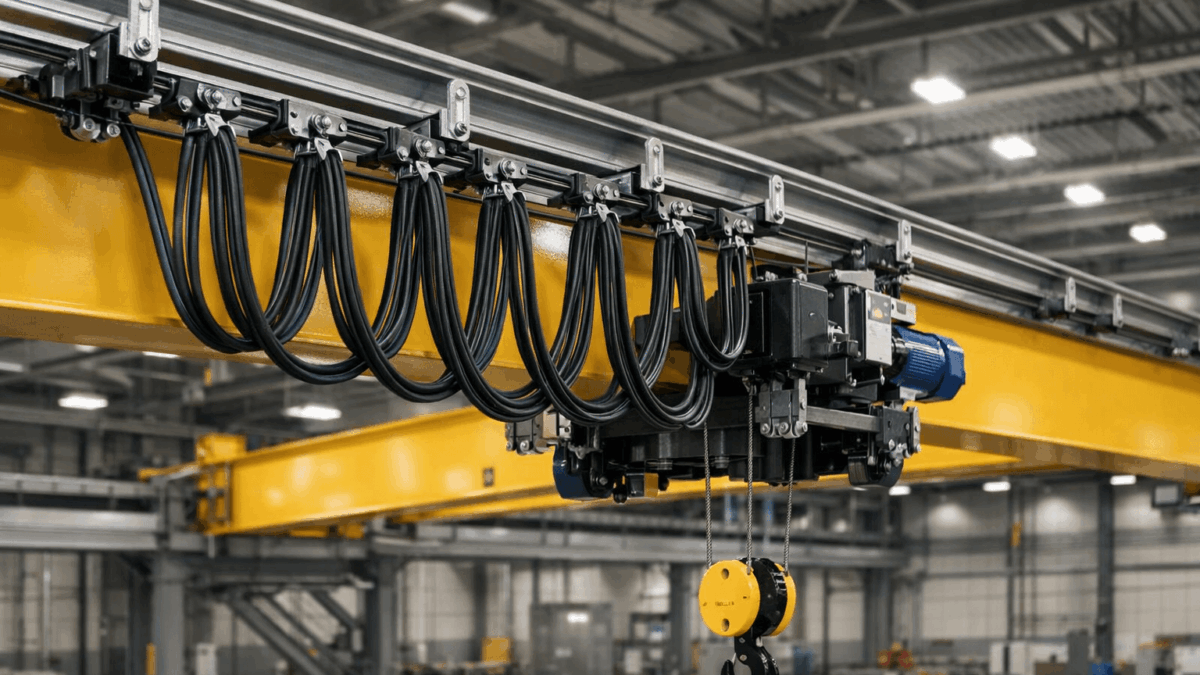
In crane and material handling environments, a festoon system is widely used to support, guide, and protect moving cables or hoses along a fixed track. It helps ensure that electrical power, control cables, or fluid lines can travel smoothly with moving equipment such as overhead cranes, hoists, transfer cars, and other industrial systems.
For engineers, project teams, and industrial buyers, understanding how a festoon system works is important when selecting a reliable cable management solution. A properly designed system can improve equipment performance, reduce cable wear, and support safer long-term operation in demanding environments.
What Is a Festoon System?
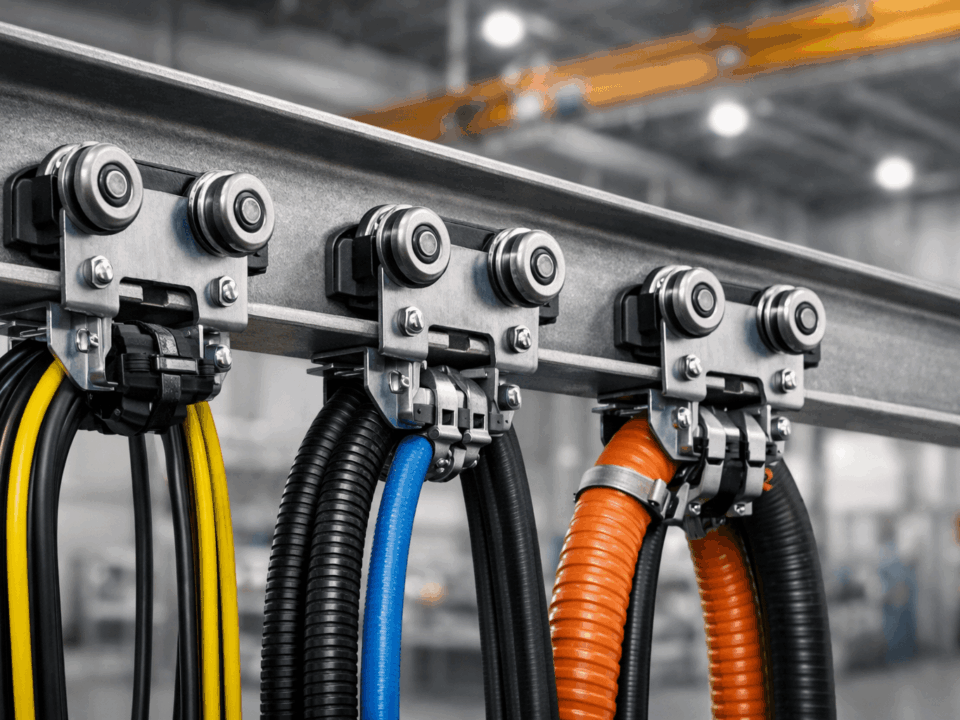
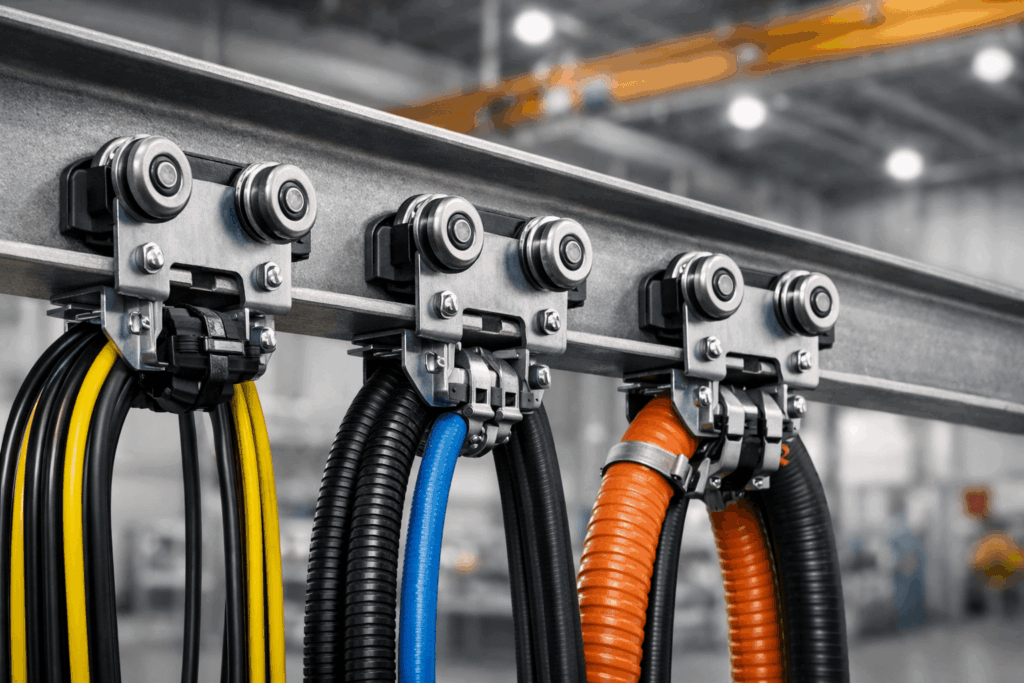
A festoon system is a cable or hose management arrangement that allows flexible cables or hoses to move together with travelling machinery. It typically consists of trolleys running on a track, with cables suspended in loops between the trolleys. As the machine moves, the trolleys follow along the track and keep the cables organised.
This design is commonly used where power supply, control signals, or media transfer must follow repeated movement across a straight travel path. In industrial settings, a festoon system is valued for its practical design, ease of maintenance, and suitability for a wide range of applications.
How Does a Festoon System Work?
The system works by using a series of cable trolleys mounted on a beam or track. The cables are fixed in loops between the trolleys, allowing controlled movement as the connected equipment travels. One end of the cable is fixed at the power source, while the other end is connected to the moving machine.
When the equipment moves forward or backward, the trolleys roll along the track and carry the cable loops in an orderly manner. This helps reduce uncontrolled dragging, twisting, or excessive bending that may otherwise shorten cable life.
In crane applications, the system must be selected carefully to match travel distance, cable weight, operating speed, environment, and maintenance expectations. This is why the right festoon system specification matters for long-term reliability.
Main Components of a Festoon System
A typical festoon system may include the following core components:
1. Track or Beam
The track provides the path for trolley movement. Depending on the application, this may be a C-track, square bar, angle iron, or I-beam arrangement. Track selection affects system stability, load support, and overall movement quality.
2. Cable Trolleys
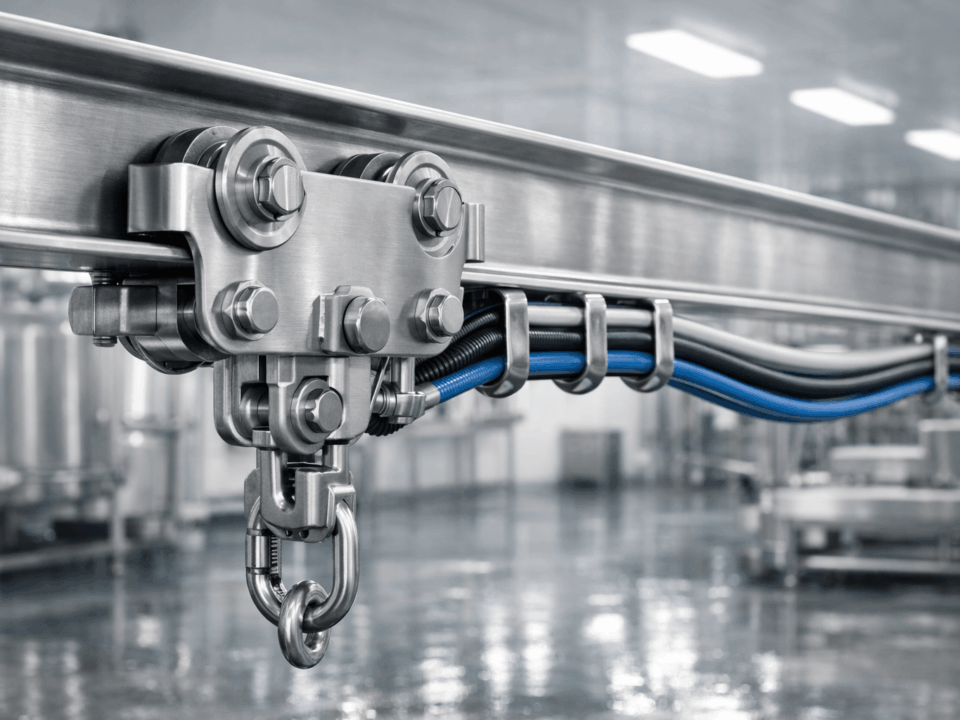
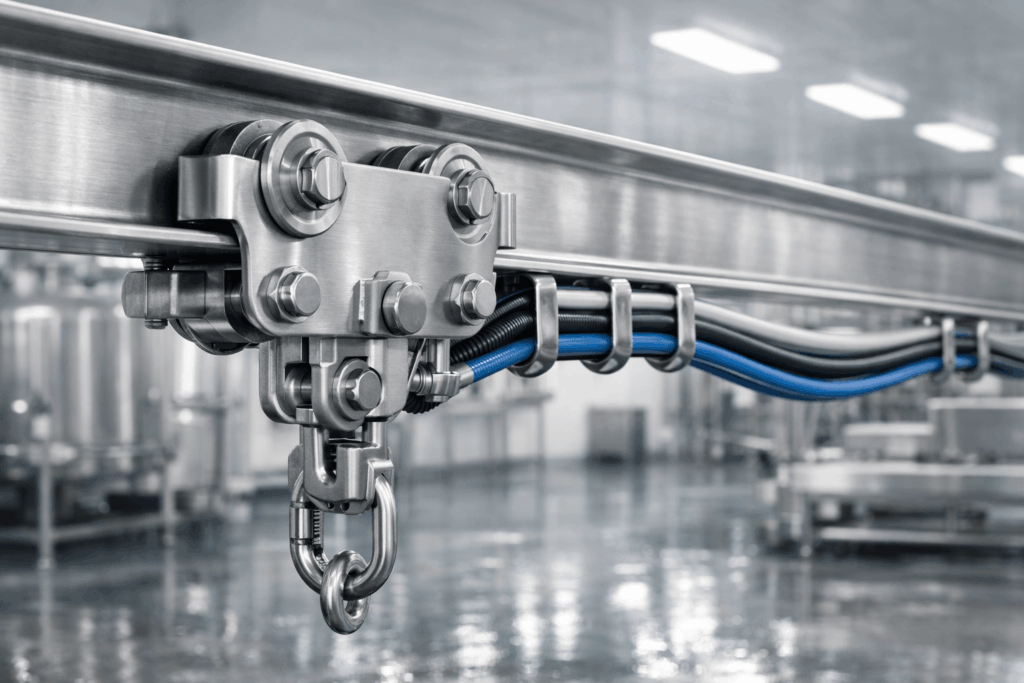
Trolleys carry the cable load and move along the track. Their design must suit the cable size, weight, duty cycle, and environment. In some applications, specialised trolley materials may be preferred, such as a stainless steel I-beam trolley for corrosive or humid conditions.
3. Tow Trolley
The tow trolley connects the moving machine to the trolley set, initiating the motion of the entire cable management arrangement.
4. End Clamps and Cable Supports
These components hold the cable in place and help maintain proper loop arrangement. Good support design reduces cable stress during repeated movement.
5. Cables or Hoses
The selected cables or hoses must be suitable for continuous flexing and environmental exposure. Cable quality is a major factor in system durability.
Why Festoon Systems Are Used in Crane Applications
Cranes and other travelling equipment require a dependable way to supply power and control signals while in motion. A festoon system is often used because it offers a practical and proven solution for straight travel movement.
Common reasons for using festoon systems in crane applications include:
- Orderly cable management for moving equipment
- Reduced cable dragging and entanglement risk
- Support for repeated travel cycles
- Easier inspection and maintenance access
- Flexibility for various industrial crane layouts
When designed correctly, festoon systems can support efficient crane operation while helping reduce unnecessary cable damage and downtime.
Typical Industrial Applications
Festoon systems are commonly used in a wide range of industries and machine movements, including:
- Overhead cranes
- Gantry cranes
- Hoists
- Transfer cars
- Material handling systems
- Automated production lines
- Water and wastewater systems
- Ports, yards, and heavy-duty industrial facilities
In many of these environments, engineers compare a festoon system with alternatives such as enclosed busbar systems or unipole systems, depending on operating conditions and system requirements.
Key Engineering Considerations When Selecting a Festoon System
Not every festoon system is suitable for every crane application. Selection should be based on actual operating conditions rather than only initial cost.
Travel Length
The total movement distance affects trolley quantity, cable loop design, and track length.
Cable Weight and Size
Heavier or larger cables require stronger support components and better load distribution.
Operating Speed
Higher travel speed may require a more robust trolley design and smoother track configuration.
Environment
Dust, humidity, outdoor exposure, chemical conditions, and temperature variation can all affect material selection and long-term durability.
Maintenance Access
A well-designed system should allow practical inspection and replacement of wear components without unnecessary downtime.
For this reason, project teams should evaluate the full operating environment before finalising a festoon system for crane use.
Festoon System vs Other Power and Cable Management Options
Festoon systems are not the only solution for moving crane applications. In some installations, other technologies may be more suitable depending on power demand, travel pattern, and environmental conditions.
For example:
- Enclosed busbar systems may be selected where continuous power supply and compact conductor design are preferred.
- Unipole systems may be considered for certain long travel or heavy-duty industrial power supply arrangements.
- I-beam trolley systems may be used in cable support applications where beam-mounted trolley movement is required.
The right choice depends on the application, load profile, environment, and maintenance priorities. A technical review is always important before selecting a system type.
Common Problems When Festoon Systems Are Poorly Selected
When a festoon system is underspecified or installed without proper engineering review, the following problems may occur:
- Premature cable wear
- Irregular trolley movement
- Cable snagging or excessive loop stress
- Track misalignment
- Higher maintenance frequency
- Unplanned stoppages in crane operation
These issues often increase over time, especially in harsh industrial environments. This is why system quality, material suitability, and proper design should never be treated as secondary considerations.
Why Quality Matters in Industrial Applications
In crane operations, the cable management system is not a small detail. It directly affects movement reliability, maintenance intervals, and operational safety. A low-quality or incorrectly matched arrangement may appear economical at first, but it can lead to higher replacement cost and operational risk later.
Choosing a dependable festoon system means looking beyond initial purchase price and focusing on long-term performance, component durability, and suitability for actual site conditions.
Conclusion
A festoon system is a practical and widely used solution for supporting moving cables and hoses in crane applications. It helps manage repeated travel movement in a controlled manner, supports cable protection, and contributes to more reliable industrial operation when correctly selected.
For engineers and industrial buyers, the key is not only understanding what a festoon system is, but also knowing when it is appropriate, how it should be specified, and what factors affect long-term service life.
Where application requirements differ, it may also be useful to compare related solutions such as enclosed busbar systems, unipole systems, or a suitable I-beam trolley system depending on the movement and operating environment.
FAQ
1. What is a festoon system used for?
A festoon system is used to support and guide moving cables or hoses for travelling equipment such as cranes, hoists, and transfer cars. It helps keep cables organised during repeated machine movement.
2. Is a festoon system suitable for overhead cranes?
Yes. A festoon system is commonly used for overhead crane applications where cables need to move safely along a fixed travel path.
3. What is the difference between a festoon system and an enclosed busbar system?
A festoon system manages flexible cables or hoses using trolley movement, while an enclosed busbar system uses conductor rails for power transmission. The choice depends on application requirements, environment, and operating design.
4. What factors affect festoon system selection?
Important factors include travel length, cable weight, speed, duty cycle, environment, and maintenance requirements. Proper selection helps improve reliability and service life.
5. Can festoon systems be used in harsh environments?
Yes, but the system design and material selection must match the environment. Dust, humidity, corrosion exposure, and outdoor conditions all influence component suitability and long-term performance.
6. Why does festoon system quality matter?
System quality affects cable protection, movement stability, maintenance frequency, and operational reliability. A poorly selected system may increase downtime and shorten cable life.
Disclaimer: Every industrial application has different operating conditions, loading requirements, and environmental factors. For accurate system selection and technical advice, it is recommended to review the application with a qualified engineering team.