
What Is a Festoon System in Crane Applications?
April 5, 2026
How Material Choice Shapes I-Beam Trolley Performance
April 10, 2026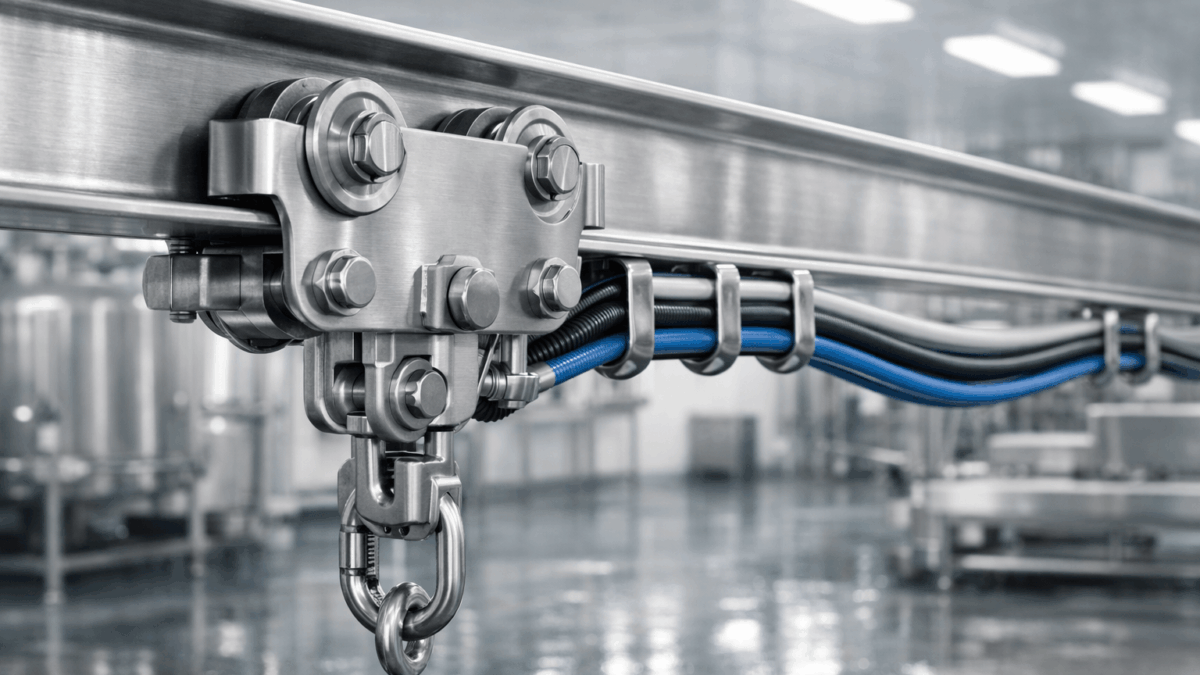
In industrial cable and hose support systems, an I-beam trolley is commonly used to carry moving loads along a fixed beam path. In some environments, however, standard material selection may not be sufficient. This is where a stainless steel I-beam trolley becomes an important engineering choice.
Stainless steel versions are typically selected when corrosion resistance, hygiene requirements, outdoor exposure, or demanding operating conditions make standard steel components less suitable over the long term. For engineers, project consultants, and industrial buyers, understanding when stainless steel is actually needed can help improve system durability and reduce avoidable maintenance issues.
What Is a Stainless Steel I-Beam Trolley?
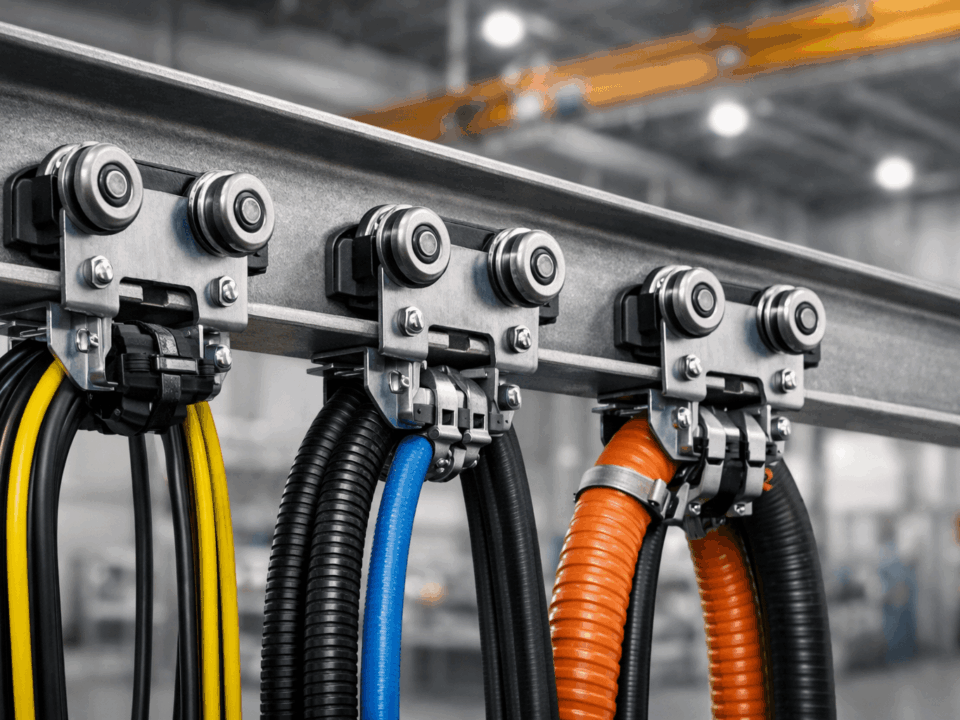
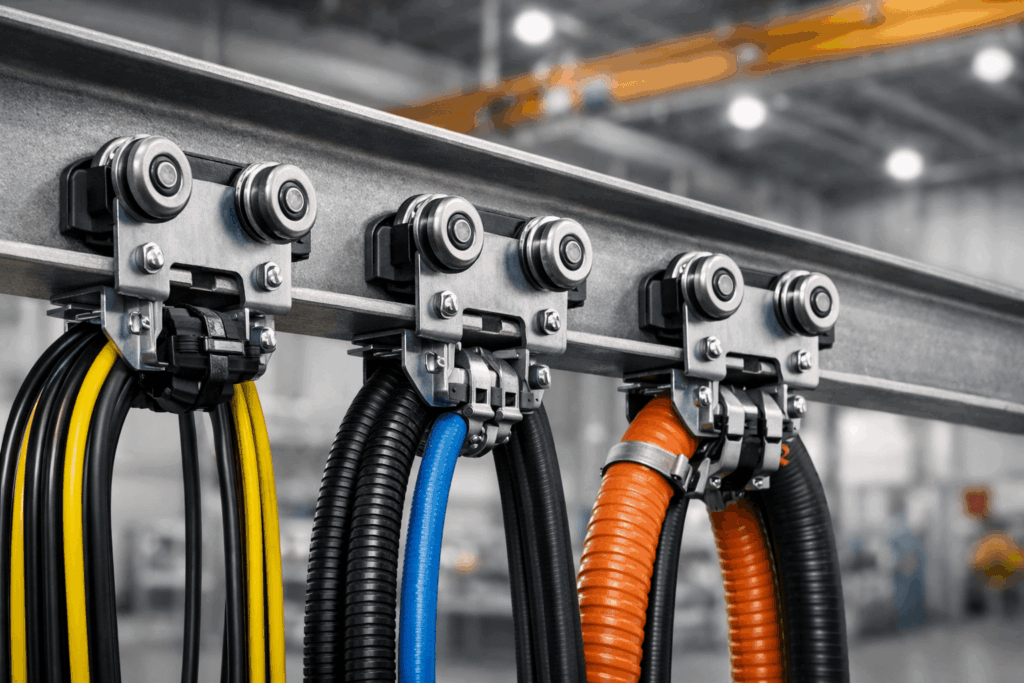
A stainless steel I-beam trolley is a trolley assembly designed to run along an I-beam track while supporting cables, hoses, or associated moving components in industrial systems. It performs the same general function as a standard I-beam trolley system, but uses stainless steel material for improved resistance against corrosion and environmental wear.
Depending on the application, stainless steel may be used for the full trolley body or for specific load-bearing and exposed components where environmental resistance is critical.
Why Stainless Steel May Be Needed Instead of Standard Steel
In controlled indoor environments, standard steel trolley systems may be sufficient if the operating conditions are dry and relatively clean. However, not all industrial environments are mild. Moisture, washdown activity, chemical exposure, coastal air, and high humidity can shorten the service life of ordinary steel components if material suitability is not reviewed properly.
This is why a stainless steel I-beam trolley may be preferred in applications where long-term corrosion resistance is a higher priority than initial material cost.
Common Industrial Environments Where Stainless Steel I-Beam Trolleys Are Used
1. Humid Industrial Facilities
High-humidity areas can accelerate corrosion over time, especially where moving metal parts are continuously exposed to moisture in the air.
2. Outdoor Installations
Outdoor systems may face rain, temperature variation, airborne contaminants, and long-term weather exposure. In these conditions, stainless steel can help improve component durability.
3. Food and Beverage Environments
Facilities with hygiene-sensitive operations often prefer materials that support better cleanliness and resistance to washdown conditions.
4. Chemical or Corrosive Areas
In plants where chemical vapour, splashing, or corrosive residue may be present, material compatibility becomes an important design factor.
5. Coastal or Marine-Influenced Locations
Salt-laden air can significantly increase corrosion risk. Stainless steel is often considered where environmental exposure is more aggressive than normal inland conditions.
How a Stainless Steel I-Beam Trolley Supports Industrial Reliability
The main advantage of stainless steel is not simply appearance. Its value lies in better resistance to environmental degradation in demanding applications. When a trolley system is exposed to conditions that promote corrosion, the wrong material choice can result in premature wear, more frequent inspection, and higher replacement cost.
A correctly selected stainless steel I-beam trolley can help support:
- Improved corrosion resistance
- Longer service life in harsh environments
- Reduced maintenance frequency in some applications
- More reliable trolley movement over time
- Better suitability for hygiene-sensitive or outdoor conditions
Important Selection Factors
Stainless steel should not be chosen purely as a default upgrade. Material selection still needs to match the actual application. Over-specifying can increase cost unnecessarily, while under-specifying can create avoidable operational risk.
Environmental Exposure
The first consideration is the actual operating environment. Humidity, washdown, chemical exposure, and outdoor use all influence whether stainless steel is justified.
Load Requirements
The trolley must still be selected according to cable weight, hose load, travel distance, and movement frequency. Material alone does not determine performance.
Beam Size and Compatibility
The trolley design must match the beam profile and mechanical requirements of the system.
Movement Duty
Repeated travel cycles, higher usage frequency, and continuous operation can place additional demands on trolley construction and component quality.
Maintenance Expectations
In facilities where maintenance access is difficult or downtime is costly, longer-lasting material choices may provide better lifecycle value.
Stainless Steel I-Beam Trolley vs Standard Steel
The main difference is material suitability, not basic operating principle. Both are designed to move along an I-beam and support travelling loads. The question is whether the operating environment requires enhanced corrosion resistance.
Standard steel may remain suitable where:
- the environment is dry and controlled
- corrosion risk is low
- maintenance access is easy
- exposure to chemicals or weather is limited
Stainless steel may be more suitable where:
- humidity is consistently high
- the installation is outdoors
- washdown is frequent
- corrosive conditions are expected
- longer-term durability is a higher priority
How It Relates to Cable and Hose Support Systems
In many industrial applications, a trolley is only one part of a broader cable management arrangement. It may work together with beam tracks, cable supports, clamps, and related movement components to ensure controlled travel of power or media lines.
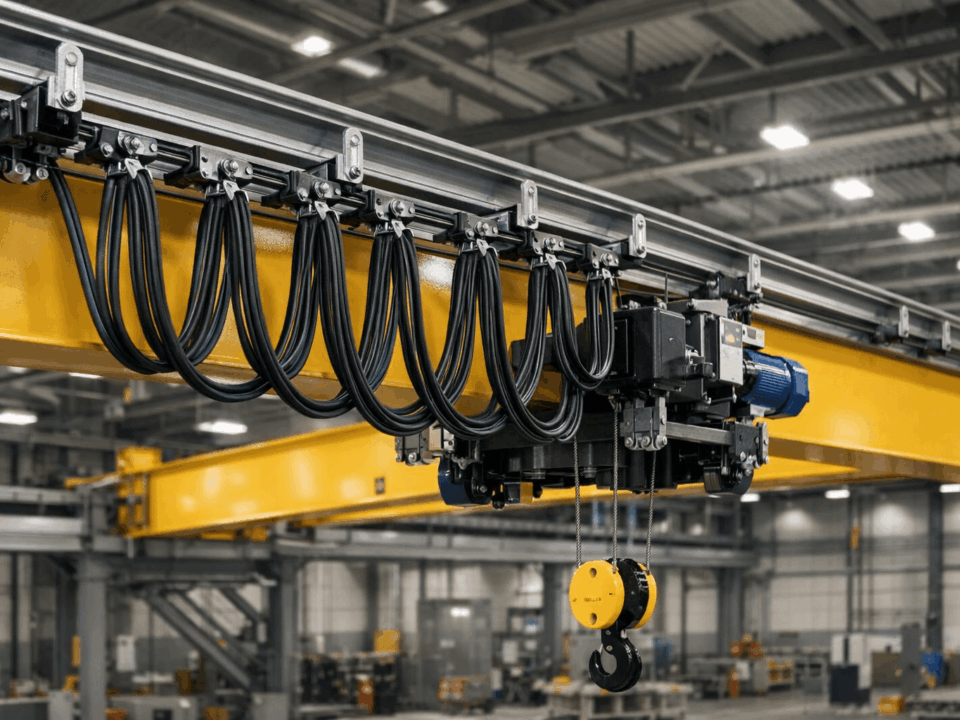
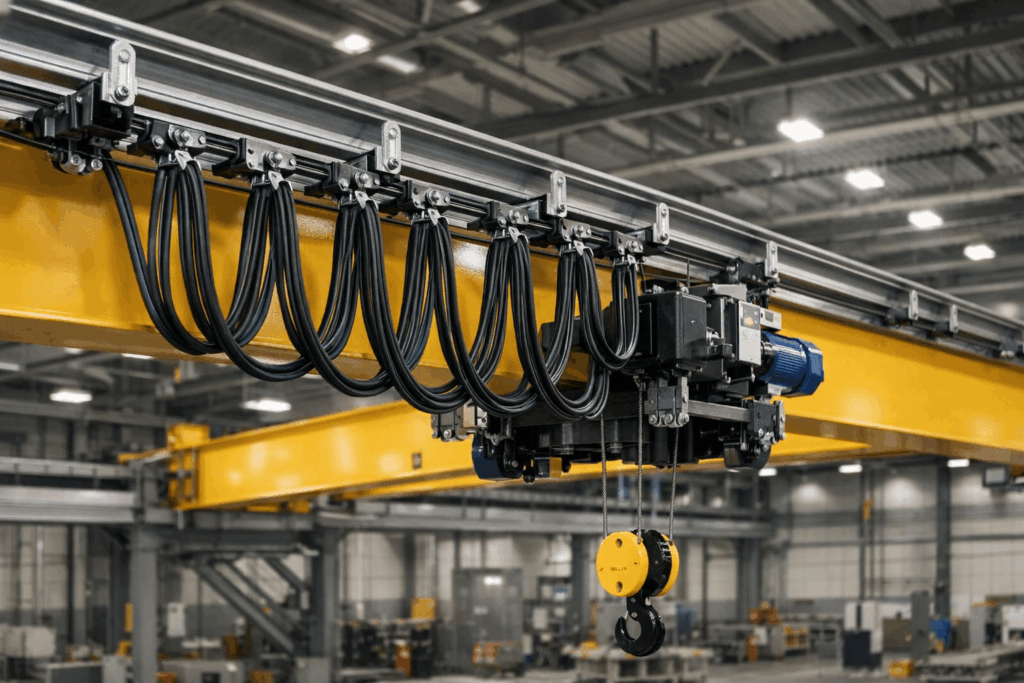
Where the broader application involves moving cables, it may also be useful to review whether an industrial festoon system is more suitable for the travel pattern and operating setup. For power transmission applications, some projects may instead compare alternatives such as an enclosed busbar system or unipole system depending on the overall engineering requirement.
Common Mistakes When Material Selection Is Not Reviewed Properly
When trolley material is chosen without proper environmental assessment, the following issues may appear over time:
- premature corrosion on exposed parts
- reduced movement smoothness
- higher maintenance frequency
- more frequent replacement of worn components
- unexpected downtime in harsh operating conditions
These issues are often avoidable when the actual site environment is reviewed at the beginning of the design or system selection process.
Conclusion
A stainless steel I-beam trolley is not required in every industrial application, but it becomes highly relevant where corrosion resistance, environmental durability, and long-term performance are important. The key is to match the trolley material and design to real operating conditions rather than selecting only on initial cost.
For industrial buyers and engineering teams, understanding when stainless steel is needed helps support better planning, more reliable movement, and lower risk of premature component failure. In related applications, it may also be useful to evaluate the wider I-beam trolley system, a suitable festoon system, or other engineered power supply solutions based on the movement requirement.
FAQ
1. What is a stainless steel I-beam trolley used for?
A stainless steel I-beam trolley is used to support moving cables, hoses, or related loads along an I-beam path in industrial systems where corrosion resistance is important.
2. When should stainless steel be used instead of standard steel?
Stainless steel is commonly considered when the application involves high humidity, outdoor exposure, washdown conditions, chemical contact, or other corrosive environments.
3. Is stainless steel always better for I-beam trolley systems?
Not always. Stainless steel is beneficial in harsher environments, but standard steel may still be suitable in dry, controlled, and low-corrosion conditions.
4. Can stainless steel I-beam trolleys be used in food and beverage facilities?
Yes. In some food and beverage environments, stainless steel may be preferred because of its resistance to corrosion and better suitability for hygiene-sensitive conditions.
5. Does a stainless steel I-beam trolley improve service life?
In the right environment, it can help improve durability and reduce corrosion-related wear. Actual service life still depends on application design, load, maintenance, and operating conditions.
6. What should be checked before selecting a stainless steel trolley?
Important factors include environment, beam compatibility, load requirement, travel frequency, maintenance access, and the broader cable or hose support design.
Disclaimer: Every industrial application has different movement conditions, loading requirements, and environmental exposure. For accurate trolley selection and technical advice, the operating conditions should be reviewed by a qualified engineering team.